

















































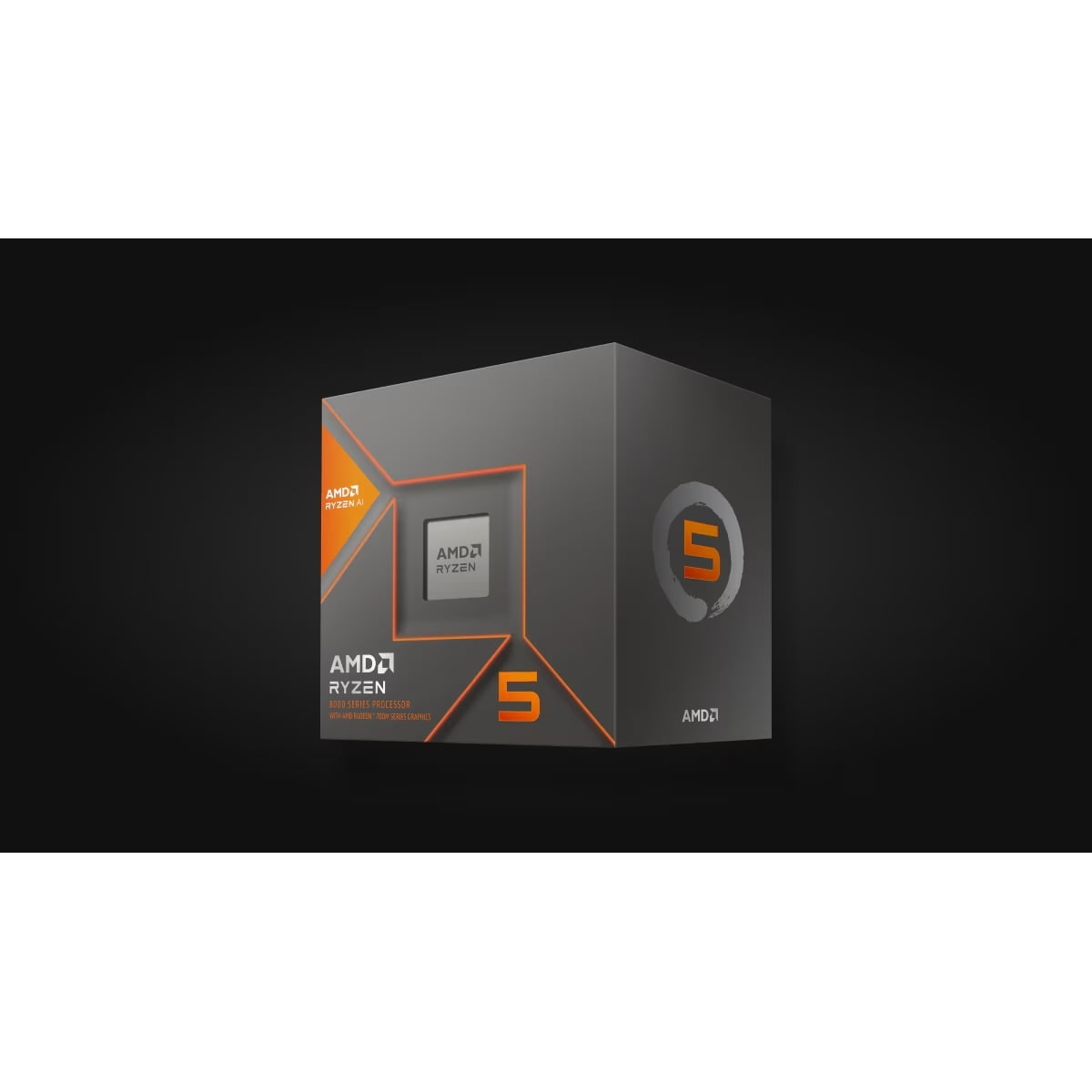
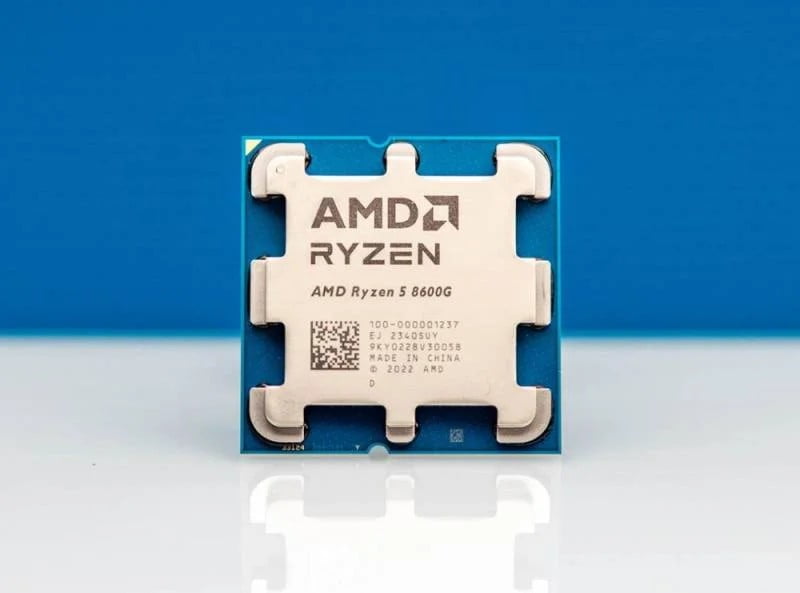
 AMD has recently updated its approach to notebook processors for the AM5 socket, introducing a similar architecture with adjusted clock speeds and a higher Thermal Design Power (TDP). These processors are now available in AM5 format instead of Ball Grid Array (BGA). This update signifies a significant advancement for the AM5 socket, expanding the range of processors from eleven to fifteen. Notably, this expansion includes the first processors in the series with an integrated Graphics Processing Unit (GPU) capable of supporting gaming applications. Previously, the Ryzen 7000 series was limited to a 2 Compute Unit (CU) RDNA 2 integrated GPU, primarily used for rendering 2D content in Windows environments with limited gaming capabilities. The desktop versions of these processors, known as Phoenix, are segmented similarly to their notebook counterparts. There are two variants: one with pure Zen 4 architecture and the other with a combination of Zen 4 and Zen 4c cores. AMD's recent announcement detailed the clock speeds for the Zen 4 cores, with plans to reveal the clock speeds for the less powerful Zen 4c cores soon. AMD consistently refers to their new APUs as "PXD" or "Phoenix Desktop" in the footnotes of their pre-release press materials. Furthermore, AMD has specified that the NPU clock speed for the Ryzen 8000G can reach up to 1.6 GHz, matching the performance of the top-tier solutions in the notebook category, known as Ryzen 8x40 Mobile or "Hawk Point." Both Phoenix Desktop and Hawk Point have a maximum of 39 TOPS. Essentially, Phoenix Desktop and Hawk Point have similar specifications. The Ryzen AI feature will only be available in the two larger APUs designed for desktop use, while the two solutions with combined Zen 4-Zen 4c cores do not include this NPU in their hardware.
In a comparison between the 8700G APU and a setup consisting of a Core i5-13400F and GeForce GTX 1650 desktop graphics card, AMD anticipates that their integrated solution may offer gaming performance between 0.89 to 1.31 times that of the Intel/NVIDIA system. Productivity benchmarks are expected to show an improvement of 1.1 to 4.6 times. AMD emphasizes the benefit of not needing separate graphics and reduced power consumption, with specific numbers to be disclosed in forthcoming reviews.
The Ryzen 8000G series, known as 'Hawk Point', includes a range of different configurations, which are outlined below:
AMD has recently updated its approach to notebook processors for the AM5 socket, introducing a similar architecture with adjusted clock speeds and a higher Thermal Design Power (TDP). These processors are now available in AM5 format instead of Ball Grid Array (BGA). This update signifies a significant advancement for the AM5 socket, expanding the range of processors from eleven to fifteen. Notably, this expansion includes the first processors in the series with an integrated Graphics Processing Unit (GPU) capable of supporting gaming applications. Previously, the Ryzen 7000 series was limited to a 2 Compute Unit (CU) RDNA 2 integrated GPU, primarily used for rendering 2D content in Windows environments with limited gaming capabilities. The desktop versions of these processors, known as Phoenix, are segmented similarly to their notebook counterparts. There are two variants: one with pure Zen 4 architecture and the other with a combination of Zen 4 and Zen 4c cores. AMD's recent announcement detailed the clock speeds for the Zen 4 cores, with plans to reveal the clock speeds for the less powerful Zen 4c cores soon. AMD consistently refers to their new APUs as "PXD" or "Phoenix Desktop" in the footnotes of their pre-release press materials. Furthermore, AMD has specified that the NPU clock speed for the Ryzen 8000G can reach up to 1.6 GHz, matching the performance of the top-tier solutions in the notebook category, known as Ryzen 8x40 Mobile or "Hawk Point." Both Phoenix Desktop and Hawk Point have a maximum of 39 TOPS. Essentially, Phoenix Desktop and Hawk Point have similar specifications. The Ryzen AI feature will only be available in the two larger APUs designed for desktop use, while the two solutions with combined Zen 4-Zen 4c cores do not include this NPU in their hardware.
In a comparison between the 8700G APU and a setup consisting of a Core i5-13400F and GeForce GTX 1650 desktop graphics card, AMD anticipates that their integrated solution may offer gaming performance between 0.89 to 1.31 times that of the Intel/NVIDIA system. Productivity benchmarks are expected to show an improvement of 1.1 to 4.6 times. AMD emphasizes the benefit of not needing separate graphics and reduced power consumption, with specific numbers to be disclosed in forthcoming reviews.
The Ryzen 8000G series, known as 'Hawk Point', includes a range of different configurations, which are outlined below:
- Ryzen 7 8700G: 8C/16T, 4.2/5.1 GHz, R780M (12CU) at 2.9 GHz, 65W TDP.
- Ryzen 5 8600G: 6C/12T, 4.35/5.0 GHz, R760M (8CU) at 2.8 GHz, 65W TDP.
- Ryzen 5 8500G: 2C+4c/12T, 3.55/5.0 GHz, R740 (4CU), 65W TDP.
- Ryzen 3 8300G: 1C+3c/8T, 3.45/4.9 GHz, R740 (4CU), 65W TDP.
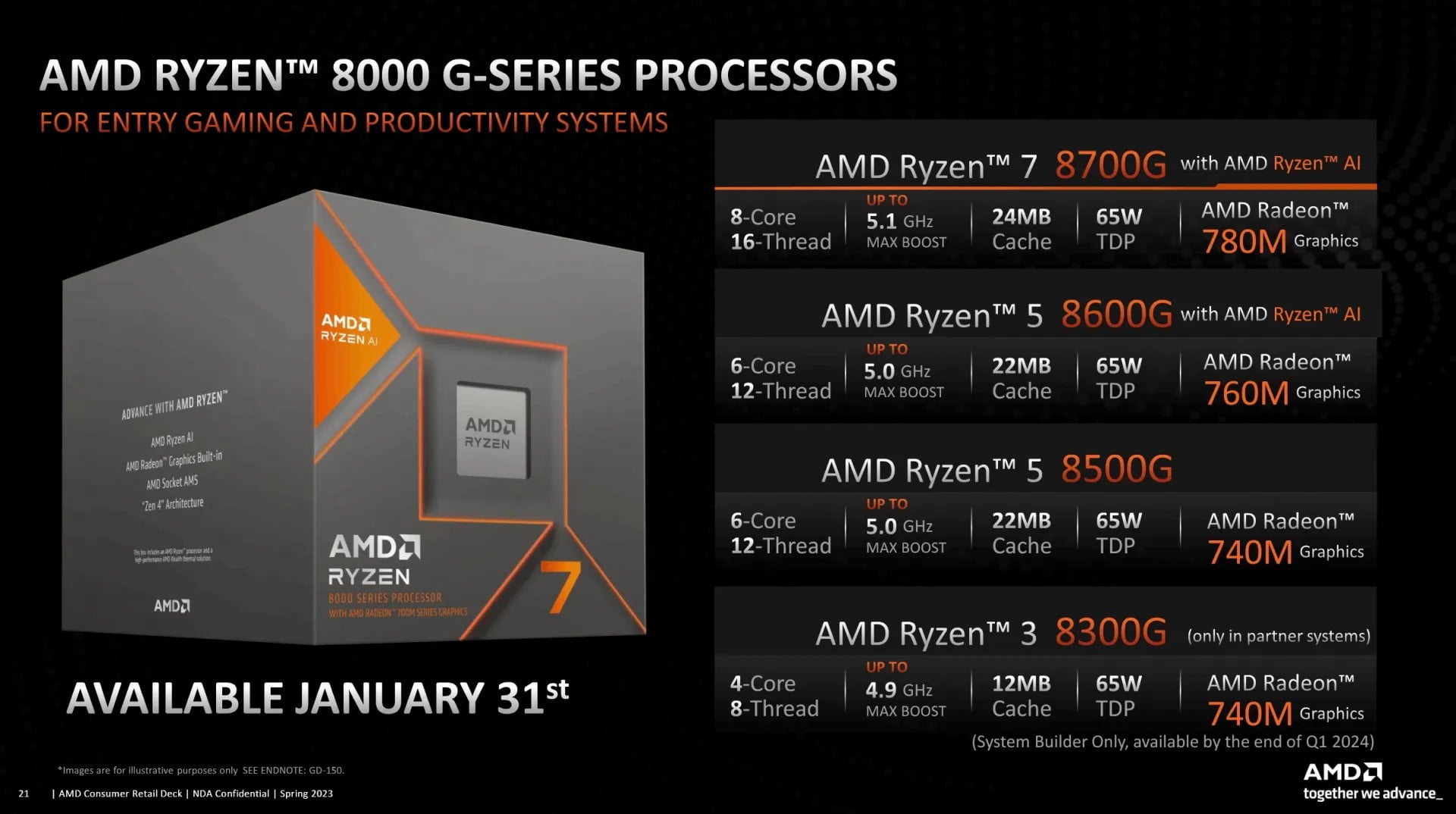
| Model | Cores/Threads | Boost / Base Frequency | Total Cache | TDP | NPU | SEP |
| AMD Ryzen 7 8700G | 8C/16T | Up To 5.1GHz / 4.2GHz | 24MB | 65W | Yes | |
| AMD Ryzen 5 8600G | 6C/12T | Up To 5.0GHz / 4.3GHz | 22MB | 65W | Yes | |
| AMD Ryzen 5 8500G | 6C/12T | Up To 5.0GHz / 3.5GHz | 22MB | 65W | N/A | |
| AMD Ryzen 3 8300G | 4C/8T | Up To 4.9GHz / 3.4GHz | 12MB | 65W | N/A | N/A |





