Pros
- Awesome performance throughout
- Fast and efficient architecture
- PCIe 4.0 support
Cons
- Rarely need so many threads
- Expensive, and no cooler as standard
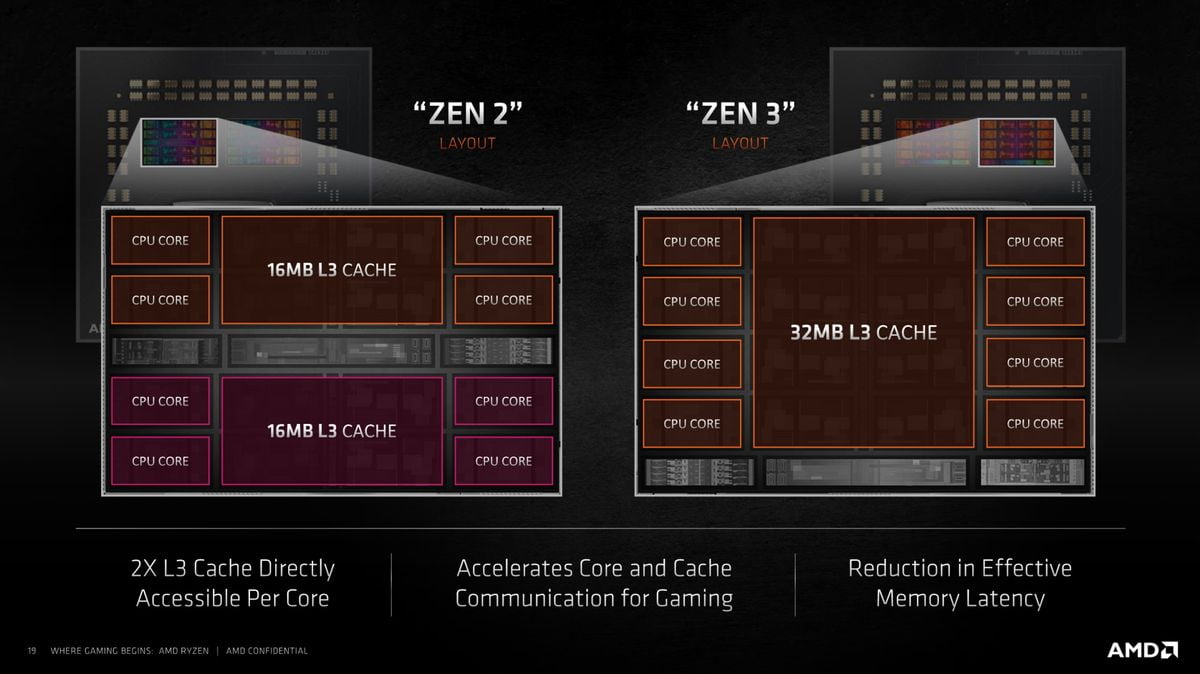
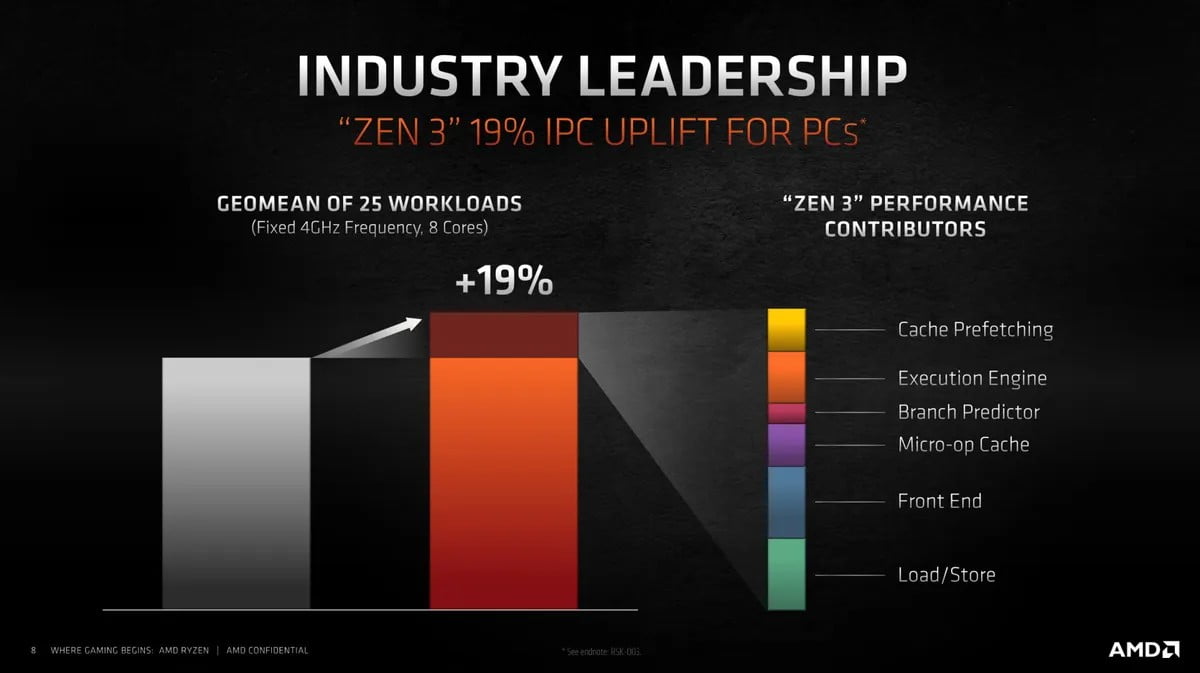 The 19 percent IPC improvement claim is not solely attributed to the reworking of core layout. The upgraded performance of Zen 3 also stems from enhancements in the processor front-end, including faster fetching due to a doubled L1 buffer size, increased bandwidth for handling branch predictions, and quicker recovery for mispredictions.
The execution engines have undergone a significant upgrade, resulting in decreased latency and increased silicon capacity for improved performance. Additionally, there has been an enhancement in load/store bandwidth to accommodate larger structures, leading to more efficient code handling and faster completion.
The significance of these IPC enhancements cannot be understated, as many PC games continue to favor CPUs that excel in processing numerous instructions per clock cycle rather than simply having a high core count. Intel's historical advantage in gaming has been attributed to its superior IPC and clock speeds, but this may no longer be the case. AMD has made significant strides in improving its IPC to the point where it can now deliver comparable performance to Intel, even at lower clock speeds.
Intel is capable of achieving higher clock speeds compared to AMD, however, AMD currently possesses a more efficient architecture. One contributing factor to this is AMD's decision to adhere to the 142W power limit set by the AM4 platform. With the improvement in IPC, AMD has managed to lower the base clock by 100MHz across its Ryzen 5000 CPUs in comparison to the previous generation. Nevertheless, this adjustment has led to an increase in the boost clock, enabling the core, or cores, requiring higher frequencies to operate accordingly.
The 19 percent IPC improvement claim is not solely attributed to the reworking of core layout. The upgraded performance of Zen 3 also stems from enhancements in the processor front-end, including faster fetching due to a doubled L1 buffer size, increased bandwidth for handling branch predictions, and quicker recovery for mispredictions.
The execution engines have undergone a significant upgrade, resulting in decreased latency and increased silicon capacity for improved performance. Additionally, there has been an enhancement in load/store bandwidth to accommodate larger structures, leading to more efficient code handling and faster completion.
The significance of these IPC enhancements cannot be understated, as many PC games continue to favor CPUs that excel in processing numerous instructions per clock cycle rather than simply having a high core count. Intel's historical advantage in gaming has been attributed to its superior IPC and clock speeds, but this may no longer be the case. AMD has made significant strides in improving its IPC to the point where it can now deliver comparable performance to Intel, even at lower clock speeds.
Intel is capable of achieving higher clock speeds compared to AMD, however, AMD currently possesses a more efficient architecture. One contributing factor to this is AMD's decision to adhere to the 142W power limit set by the AM4 platform. With the improvement in IPC, AMD has managed to lower the base clock by 100MHz across its Ryzen 5000 CPUs in comparison to the previous generation. Nevertheless, this adjustment has led to an increase in the boost clock, enabling the core, or cores, requiring higher frequencies to operate accordingly.
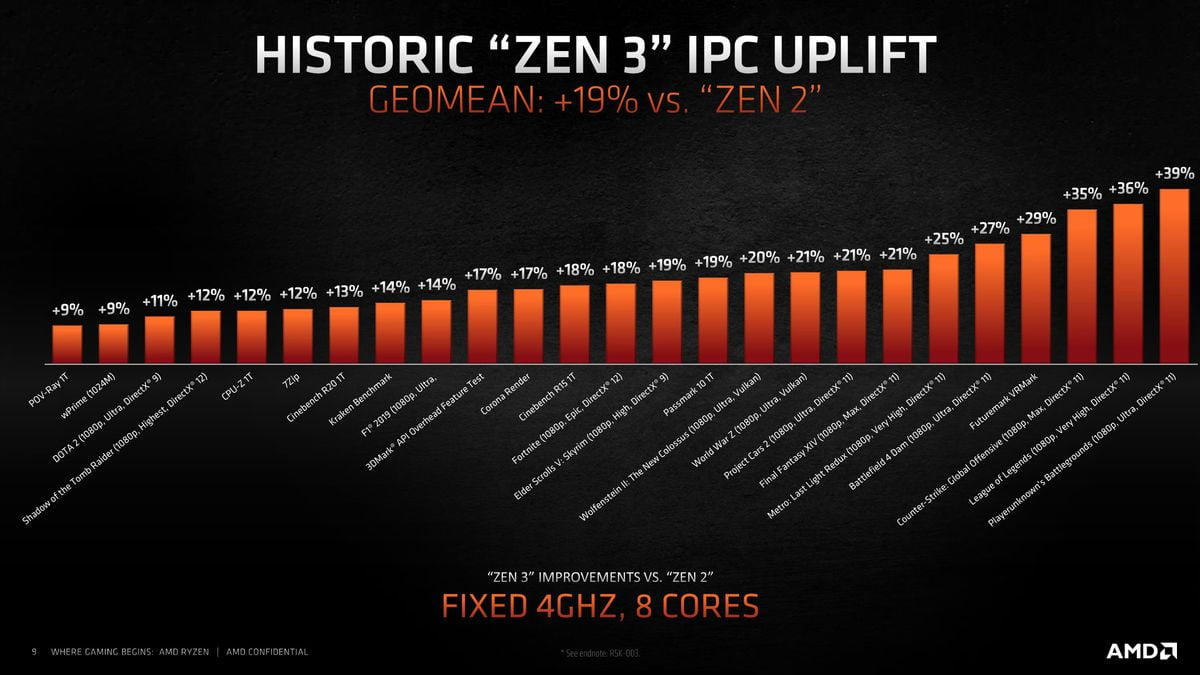 It is important to highlight the origin of AMD's 19 percent IPC improvement statistic. This figure is derived from the average performance gains observed across various benchmarks when comparing 8-core chips running at the identical 4GHz frequency. However, when specifically considering gaming performance, AMD claims a 26 percent improvement when transitioning from a Ryzen 9 3900X to the latest Ryzen 9 5900X. Games such as PlayerUnknown's Battlegrounds may even experience up to a 50% boost in performance.
AMD has opted to utilize the identical 12nm I/O die manufactured by GlobalFoundries for these latest processors. This decision is logical given the minimal impact on system connectivity. Moreover, the Infinity Fabric now has the capability to support clock speeds of up to 2,000MHz, when paired with DDR4-4000, this combination signifies the new optimal level for memory performance.
The approved standard for memory support remains DDR4-3200, despite successfully testing the new chips with DDR4-3600 and DDR4-4000 RAM without any issues. It is important to highlight that AMD is currently in the process of optimizing the Infinity Fabric to operate smoothly at 1,900MHz and 2,000MHz on all platforms, although this feature will not be accessible upon release.
It is important to emphasize that Ryzen 5000 CPUs are compatible with 400- and 500-series motherboards. However, older B450s and X470s will not receive the required BIOS updates until January at the earliest, and even then, it will be for the first beta BIOSes. Those with older motherboards will likely have to wait until February or March for full Ryzen 5000 compatibility. If you are planning to build a new system with these new chips, it is recommended to choose a motherboard with A520, B550, or X570 chipsets.
It is important to highlight the origin of AMD's 19 percent IPC improvement statistic. This figure is derived from the average performance gains observed across various benchmarks when comparing 8-core chips running at the identical 4GHz frequency. However, when specifically considering gaming performance, AMD claims a 26 percent improvement when transitioning from a Ryzen 9 3900X to the latest Ryzen 9 5900X. Games such as PlayerUnknown's Battlegrounds may even experience up to a 50% boost in performance.
AMD has opted to utilize the identical 12nm I/O die manufactured by GlobalFoundries for these latest processors. This decision is logical given the minimal impact on system connectivity. Moreover, the Infinity Fabric now has the capability to support clock speeds of up to 2,000MHz, when paired with DDR4-4000, this combination signifies the new optimal level for memory performance.
The approved standard for memory support remains DDR4-3200, despite successfully testing the new chips with DDR4-3600 and DDR4-4000 RAM without any issues. It is important to highlight that AMD is currently in the process of optimizing the Infinity Fabric to operate smoothly at 1,900MHz and 2,000MHz on all platforms, although this feature will not be accessible upon release.
It is important to emphasize that Ryzen 5000 CPUs are compatible with 400- and 500-series motherboards. However, older B450s and X470s will not receive the required BIOS updates until January at the earliest, and even then, it will be for the first beta BIOSes. Those with older motherboards will likely have to wait until February or March for full Ryzen 5000 compatibility. If you are planning to build a new system with these new chips, it is recommended to choose a motherboard with A520, B550, or X570 chipsets.
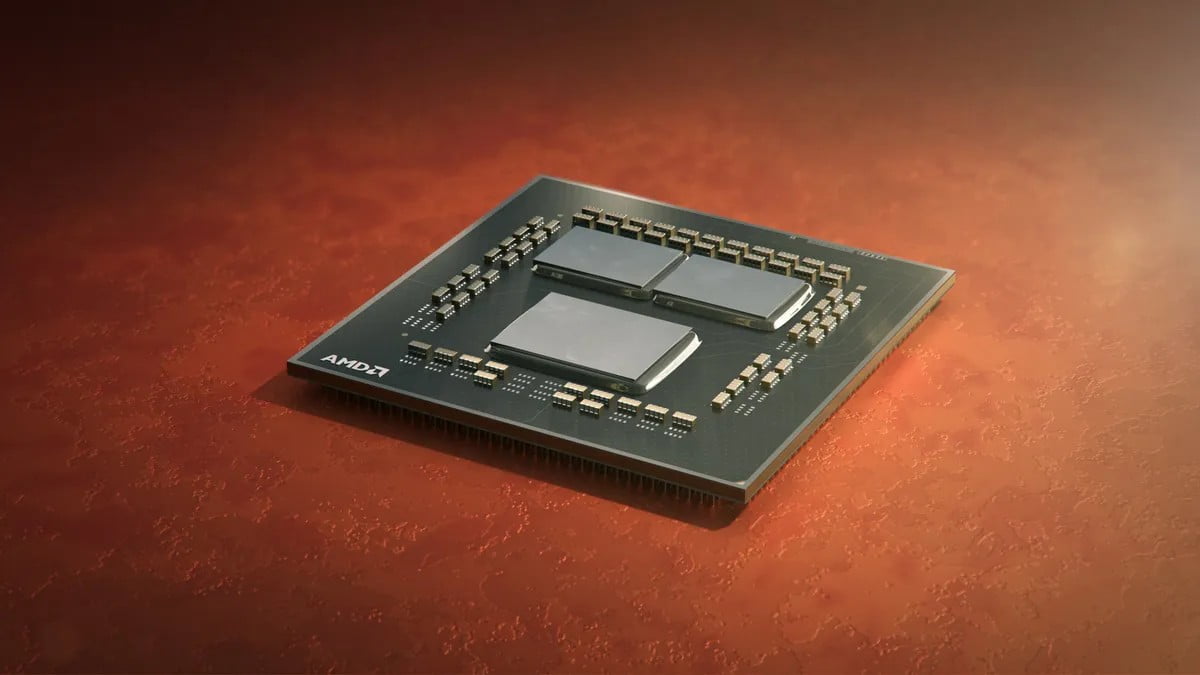
RYZEN 9 5900X SPECS.
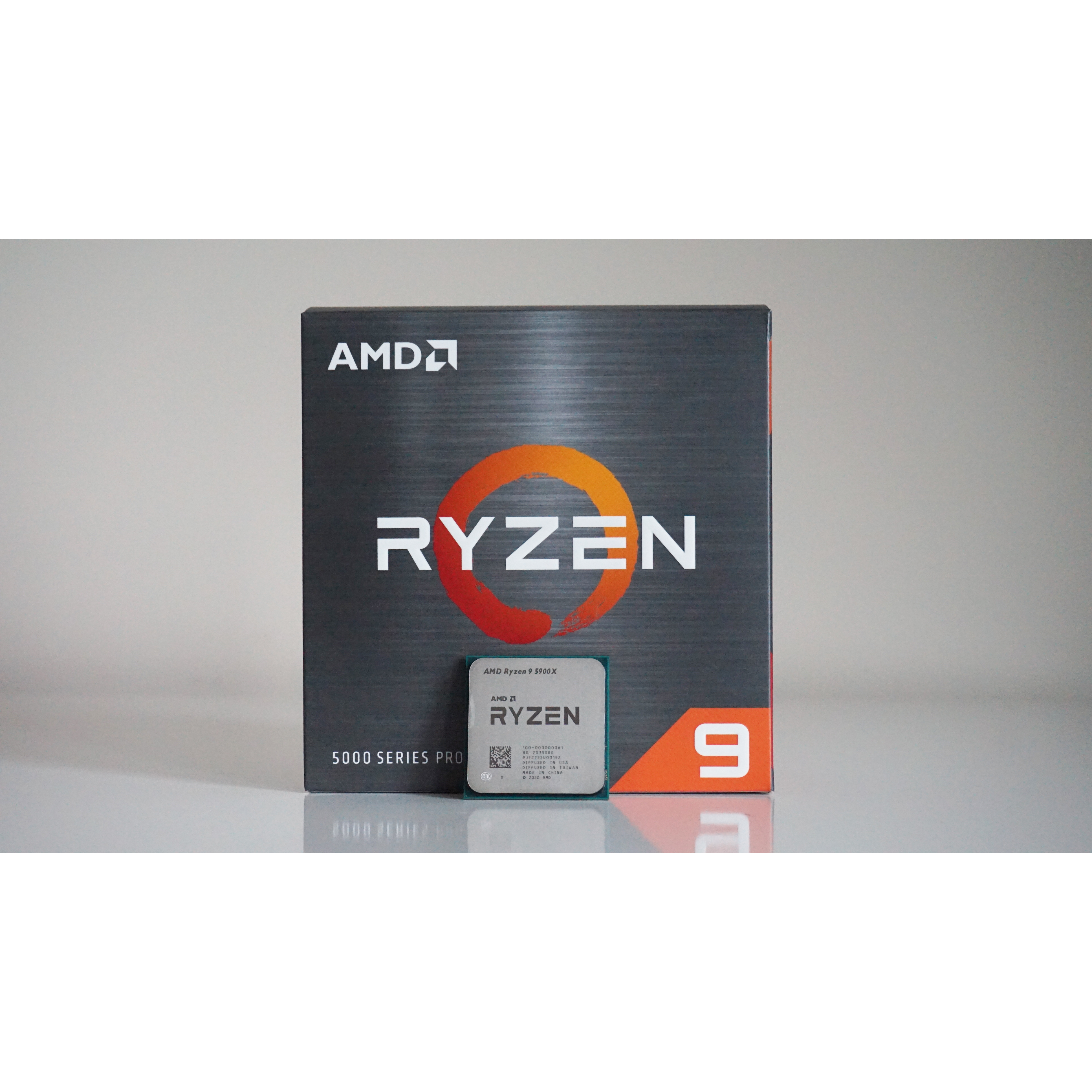
The Ryzen 9 5900X is AMD's high-end mainstream chip, equipped with 12 cores and 24 threads, a base clock of 3.7GHz, and a potential boost clock of 4.8GHz. It features 64MB of L3 cache, support for PCIe 4.0, and maintains a 105W TDP like its predecessor. Unlike the 3900X, it does not include a cooler. The core and thread count of this chip is identical to that of the 3900X, which was launched slightly over a year ago. At that time, it was reasonable to conclude that while this setup was excellent for demanding tasks, games were not yet optimized to fully utilize the abundance of threads. This remains true today, and anything beyond an 8-core, 16-thread setup is still excessive for current gaming needs. This chip is tailored for professional work, but it is also capable of meeting your gaming requirements, but we will discuss that in more detail later. The frequencies observed in operation are heavily influenced by the specific application being utilized and the areas where power demand is highest. For instance, in a thread-intensive application such as 3D rendering, all cores may be utilized equally, resulting in a stable frequency of 4.2GHz. On the other hand, single-threaded applications are expected to reach a maximum frequency of 4.8GHz on one core, but in practice, some cores have been observed to exceed this limit, reaching speeds as high as 4.95GHz during testing. To comprehend the current situation, it is important to briefly review Precision Boost 2, the technology utilized by AMD since the release of its Ryzen 2000 processors to enhance frequencies in real-time. This feature is not related to overclocking and cannot be disabled; rather, it is a mechanism designed to increase clock speed when there is available capacity to do so, ensuring optimal performance of the chips. It is not a fixed setting, but rather enables the chips to adjust dynamically to different workloads. The chip monitors various activity levels to determine if boosting is possible, and it can make rapid adjustments in milliseconds. In order to grasp the ongoing situation, it is essential to briefly examine Precision Boost 2, the technology employed by AMD since the debut of its Ryzen 2000 processors to elevate frequencies on-the-fly. This is distinct from overclocking and cannot be deactivated; instead, it is a system that boosts clock speed when there is room for improvement, guaranteeing peak performance of the chips. It is not a static configuration, but rather enables the chips to adapt dynamically to varying workloads. The chip monitors multiple activity indicators to ascertain the feasibility of boosting, and it can swiftly make adjustments in milliseconds. One crucial aspect to consider is that Ryzen 5000 chips exhibit an assertive approach towards utilizing sleep states to minimize power consumption. Inactive cores are not downclocked or undervolted; rather, they are effectively disabled, drawing no power and generating no heat. Consequently, the active cores have additional power and thermal capacity to operate at higher clock speeds in critical tasks. It is encouraging to note that the 5900X has exceeded the maximum boost clock on multiple occasions, indicating that AMD is not exaggerating the capabilities of these new chips. This is a significant improvement from Zen 2, where it was difficult to observe the top boost clock being reached. As a result, users can expect to see the boost clocks being consistently achieved.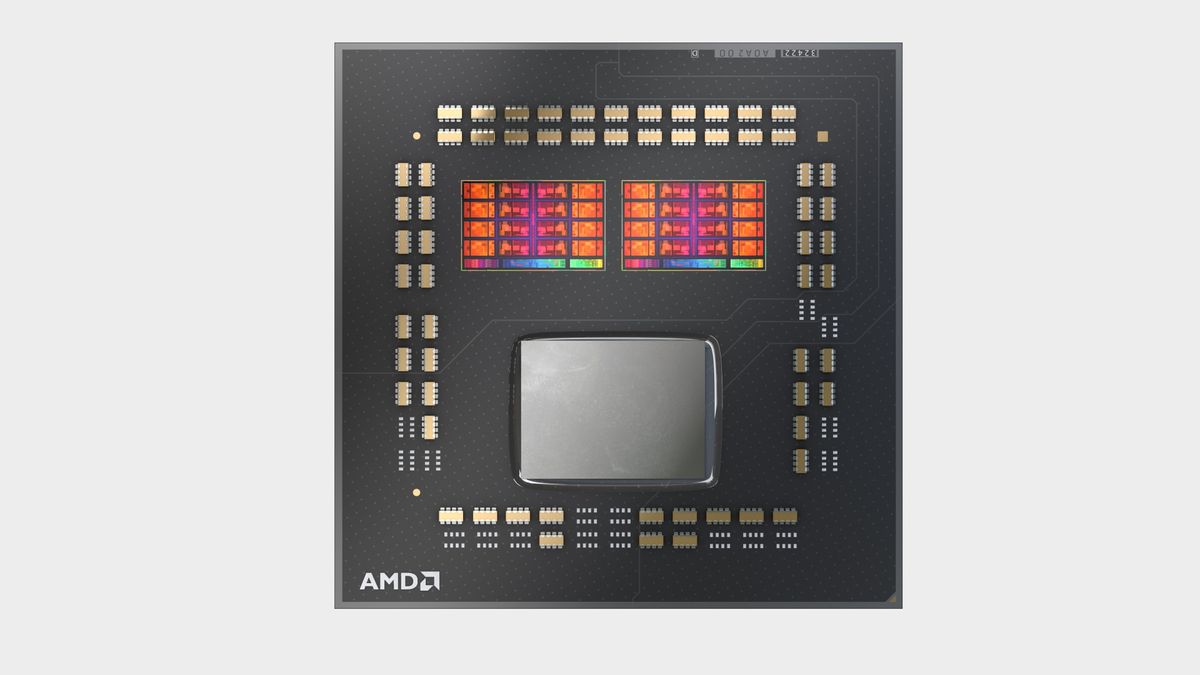
RYZEN 9 5900X PERFORMANCE.
The crucial aspect is performance. A processor may possess the most intelligent architecture, but if it doesn't perform, what's the use? Fortunately for AMD and potential buyers of the Ryzen 9 5900X, it performs exceptionally well. Whether it's handling intensive tasks like video encoding and 3D rendering or gaming, the Ryzen 9 5900X truly delivers. It's a powerhouse. Cinebench R20 serves as an excellent tool for evaluating the sheer processing capability of a chip, and it thrives on utilizing numerous high-performance threads. In comparison to the previous generation 3900XT, the 5900X demonstrates a substantial 16 percent improvement in multithreaded performance, while also showcasing a noteworthy 20 percent increase in single-core performance. I have added the 16-core, 32-thread 3950X to provide a point of reference, and the recent processor performs nearly as well. In contrast, Intel's 10-core, 24-thread 10900K falls short, as AMD's newest chip boasts a significant 30 percent increase in speed. The 16-core, 32-thread 3950X has been included for comparison purposes, and the latest chip from AMD is almost as speedy. In contrast, Intel's 10-core, 24-thread 10900K lags behind significantly, with AMD's most recent chip outperforming it by a solid 30 percent. When examining video encoding, the X264 v5.0 benchmark shows a significant difference between AMD's latest chip and the 10900K. The AMD chip achieves an impressive 75 frames per second compared to the 52 frames per second of the 10900K, giving AMD a 45 percent lead. Additionally, the 5900X slightly outperforms the 3950X, highlighting the impressive capabilities of this new chip. In terms of temperatures and power consumption, there are no concerning issues to mention in this case. AMD has maintained the 142W socket power, as previously stated, and this was evident during intense usage. During idle periods, when cores are deactivated and activity is minimal, the power draw decreases to 25W, showcasing impressive efficiency. The highest temperature recorded was 81°C, a figure similar to that of the 3900XT. Regarding the games, there are several key points to consider. One notable aspect is the significant improvement in overall performance in certain titles, as evidenced by the score of F1 2019. When compared to the 3900X, there is a 20 percent boost in performance. However, what is even more significant than the advancements from the previous generation is the fact that there is now virtually no difference between the 5900X and Intel's top Core i9 10900K. In some games, there is not an equal performance between Intel and AMD processors. For example, in Assassin's Creed Odyssey at 1440p, Intel still maintains a 7fps advantage. However, in Total War: Three Kingdoms at 1080p, the 5900X surpasses Intel's top processor. When gaming at 4K, the performance gap between Intel and AMD is negligible, with frame rates falling within the margin of error. If you are looking to purchase a processor and are mainly a gamer, there is virtually no difference between the two options. While AMD may not have achieved the level of dominance it initially promised at launch, our testing shows that the performance gap between these chips is now minimal. While there may be a few games that run slightly better on one platform compared to the other, the overall gaming performance is essentially identical.