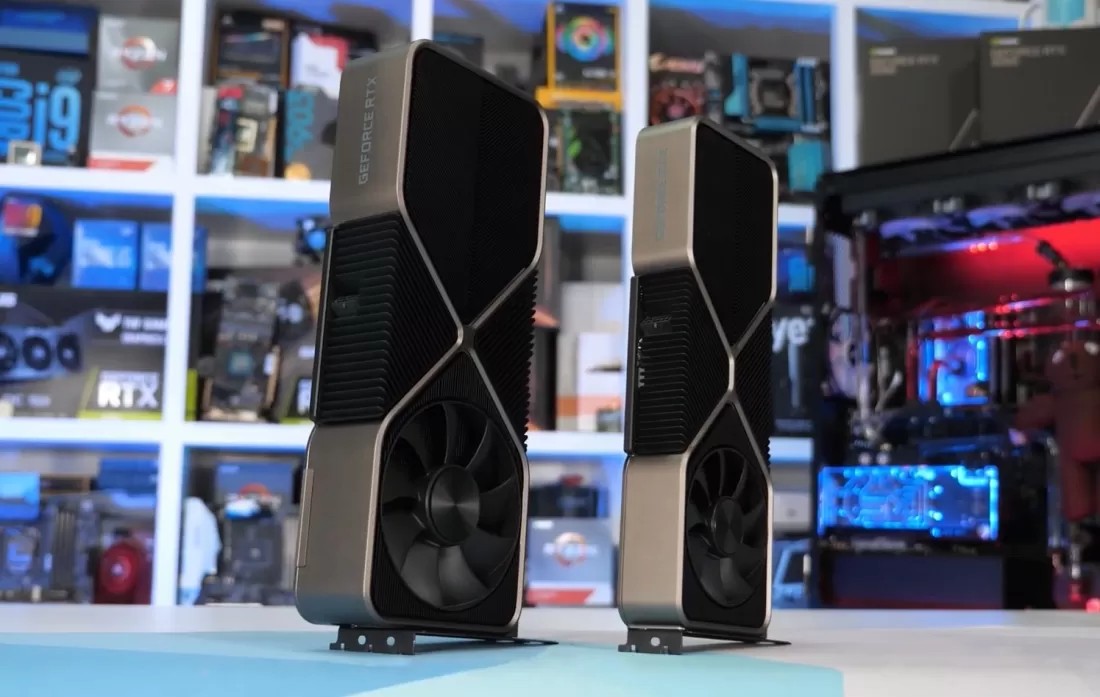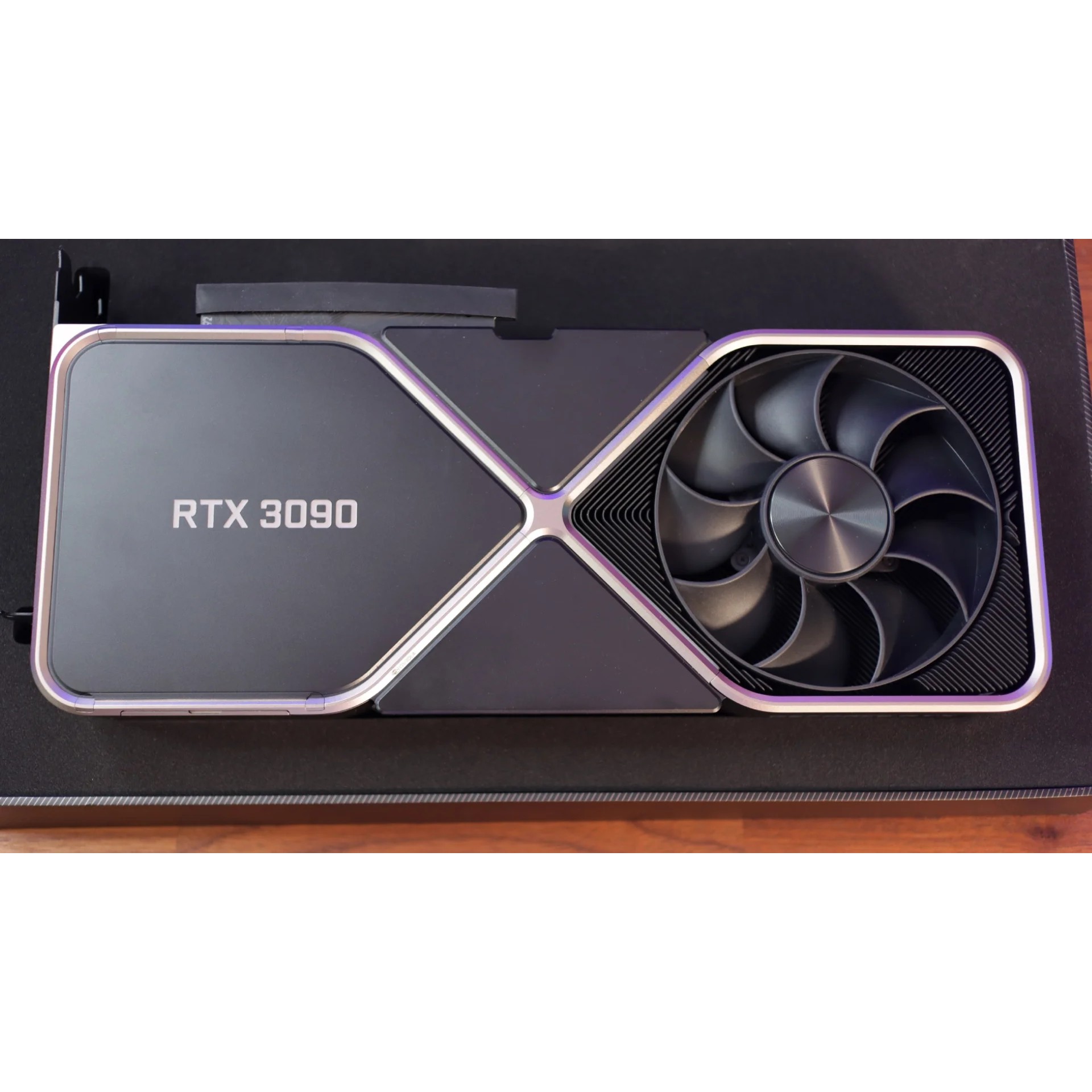
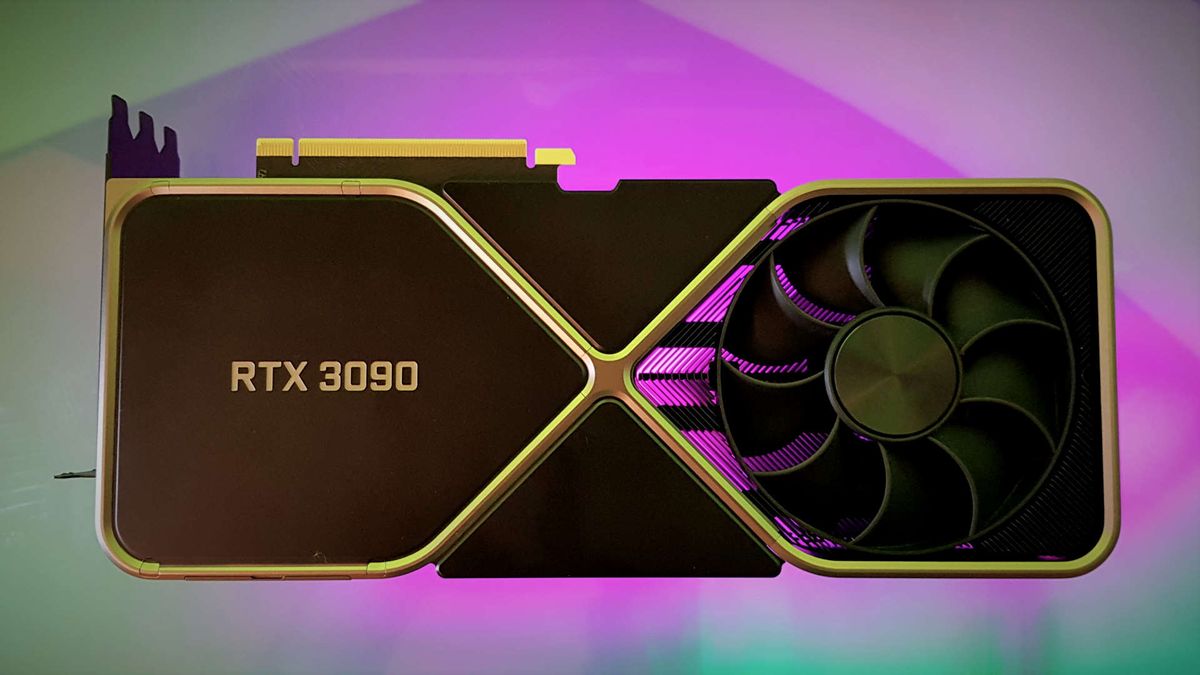
 On September 1, 2020, NVIDIA unveiled its initial trio of Ampere graphics cards during the first launch event. Prior to the announcements, there was an unexpected alteration in the specifications of the GeForce RTX 3080 and 3090, as the Shader core count unexpectedly doubled from earlier expectations. These GPUs are manufactured using an 8nm process developed by Samsung, which represents an advancement over Samsung's 10nm technology, although extreme ultraviolet (EUV) lithography has not yet been utilized in production. The initial launch featured the GeForce RTX 3080 and 3090, with the GeForce RTX 3070 also set to debut around the same period, adding an element of surprise. The consumer launch of the Ampere series includes the GeForce RTX 3070 with 8GB of GDDR6 memory, the RTX 3080 with 10GB of GDDR6X memory, and the flagship model we are evaluating today, the GeForce RTX 3090, which boasts 24GB of GDDR6X memory. This lineup nearly doubles the ray-tracing performance thanks to the second-generation ray-tracing cores and third-generation Tensor cores. All these cards are compatible with the PCIe 4.0 interface and support HDMI 2.1 and DisplayPort 1.4a. Most notably, the Shader processor count, referred to as CUDA cores by NVIDIA, exceeds the 10,000 mark, a development that took everyone by surprise.
The NVIDIA GA102 GPU serves as the foundation for two initial products: the GeForce RTX 3080 and 3090 graphics cards. This substantial GPU die is noteworthy, particularly the GA102-300-A1 variant found in the 3090, which features 10,496 Shader processors and an impressive 28 billion transistors. It is important to note that this configuration does not represent the fully unlocked potential of the GPU. For reference, the GeForce RTX 3080 is equipped with 8,704 Shader cores, while the GeForce RTX 3070 (utilizing the GA104) offers 5,888 Shader cores. In this review, we will focus on the flagship model, the Founders Edition GeForce RTX 3090, which is complemented by 24GB of GDDR6X graphics memory—24GB and over 10,000 Shader cores is indeed remarkable.
On September 1, 2020, NVIDIA unveiled its initial trio of Ampere graphics cards during the first launch event. Prior to the announcements, there was an unexpected alteration in the specifications of the GeForce RTX 3080 and 3090, as the Shader core count unexpectedly doubled from earlier expectations. These GPUs are manufactured using an 8nm process developed by Samsung, which represents an advancement over Samsung's 10nm technology, although extreme ultraviolet (EUV) lithography has not yet been utilized in production. The initial launch featured the GeForce RTX 3080 and 3090, with the GeForce RTX 3070 also set to debut around the same period, adding an element of surprise. The consumer launch of the Ampere series includes the GeForce RTX 3070 with 8GB of GDDR6 memory, the RTX 3080 with 10GB of GDDR6X memory, and the flagship model we are evaluating today, the GeForce RTX 3090, which boasts 24GB of GDDR6X memory. This lineup nearly doubles the ray-tracing performance thanks to the second-generation ray-tracing cores and third-generation Tensor cores. All these cards are compatible with the PCIe 4.0 interface and support HDMI 2.1 and DisplayPort 1.4a. Most notably, the Shader processor count, referred to as CUDA cores by NVIDIA, exceeds the 10,000 mark, a development that took everyone by surprise.
The NVIDIA GA102 GPU serves as the foundation for two initial products: the GeForce RTX 3080 and 3090 graphics cards. This substantial GPU die is noteworthy, particularly the GA102-300-A1 variant found in the 3090, which features 10,496 Shader processors and an impressive 28 billion transistors. It is important to note that this configuration does not represent the fully unlocked potential of the GPU. For reference, the GeForce RTX 3080 is equipped with 8,704 Shader cores, while the GeForce RTX 3070 (utilizing the GA104) offers 5,888 Shader cores. In this review, we will focus on the flagship model, the Founders Edition GeForce RTX 3090, which is complemented by 24GB of GDDR6X graphics memory—24GB and over 10,000 Shader cores is indeed remarkable.