Cons
- Memory support isn't perfect yet
- It's priced into X670/E territory
What type of AM5 motherboard are you considering purchasing? The X670E model is often regarded as having the most comprehensive feature set, although it usually comes with a higher price tag. The X670 variant lacks PCIe 5.0 graphics but compensates with enhanced I/O capabilities. Have you thought about the B650? These motherboards generally provide solid core features and are the most budget-friendly options within the AM5 range, though some may sacrifice essential elements. Perhaps a balanced choice like the B650E would meet your needs effectively.
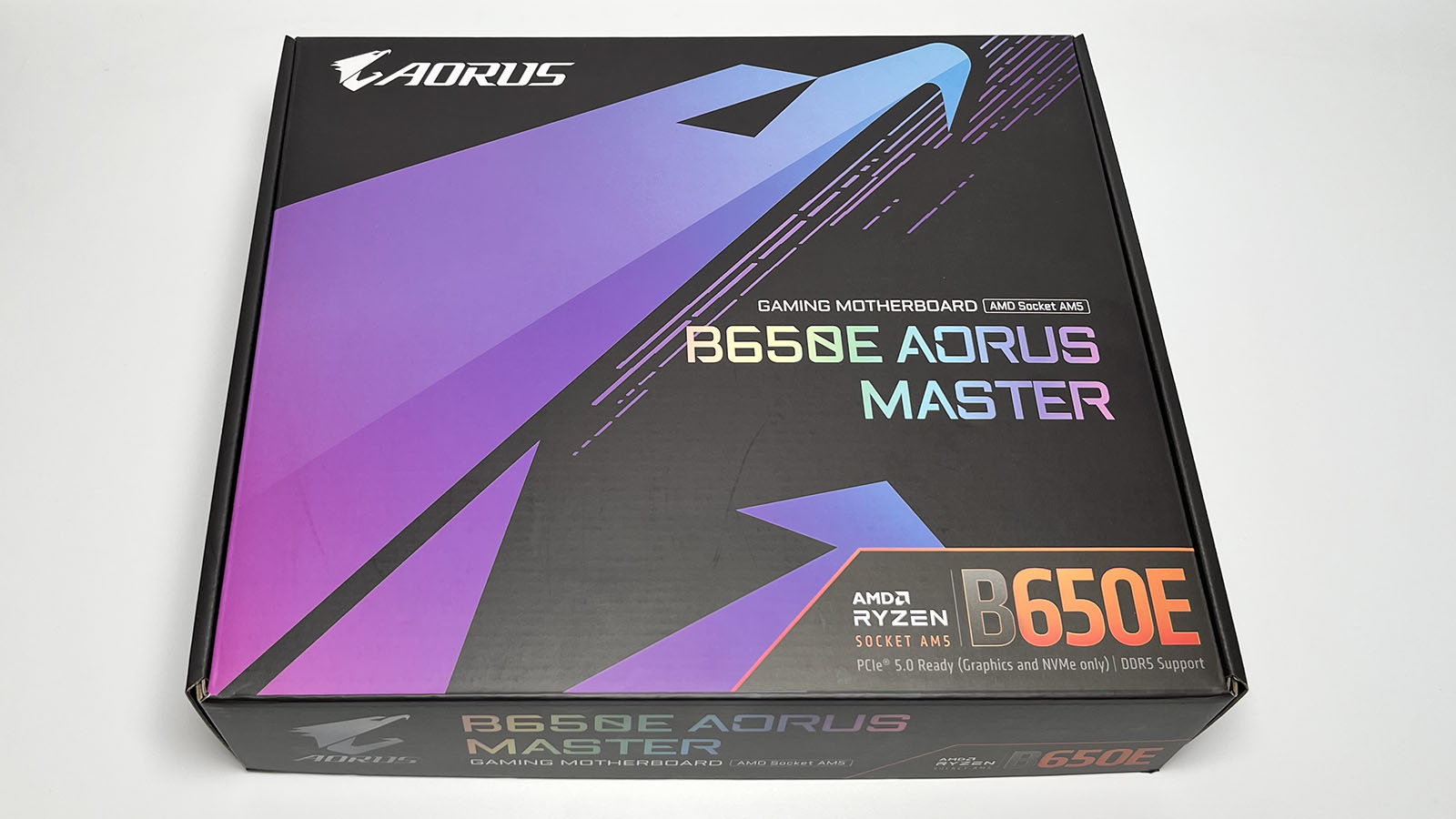
In my latest evaluation of the Asus TUF Gaming B650 Plus WiFi, I found it to be a competent and well-designed motherboard; however, it lacks certain key features, including WiFi 6E and support for PCIe 5.0 slots. If you are considering a motherboard that will accommodate multiple CPU upgrades—AMD anticipates supporting the AM5 socket until at least 2025—these features may be essential for future-proofing. In contrast, the Gigabyte B650E Aorus Master offers both of these capabilities, along with additional enhancements.
Prior to discussing the Aorus Master, it is essential to provide a brief overview of the chipset. The B650 motherboards utilize a 'one-chip' chipset, in contrast to the daisy-chained configuration found in the X670/E series. Consequently, the B650 offers a reduced number of PCIe 4.0 lanes and a more limited I/O configuration. In contrast, the B650E supports PCIe 5.0 for graphics and M.2, which is not available in the B650.
At present, PCIe 5.0 may not be of significant importance; however, it will become relevant in the future. Therefore, if you are considering advancements such as Zen 5 or the RTX 50-series graphics cards, having adequate support for PCIe 5.0 is advisable.
The B650E Aorus Master, although categorized as a B series motherboard, does not fall into the realm of inexpensive options. Is the additional cost justified when compared to a more budget-friendly B650 model? Alternatively, does its pricing encroach too much into the territory of the X670? I am eager to discover the answer.
An overview and specifications of the Gigabyte B650E Aorus Master.
Aorus Master motherboards represent premium choices, generally linked with high-end chipsets. As of the current date, the price is. While this positions it as a costly option, it is at expensive compared to the X670E Aorus Master or the Z790 Aorus Master.
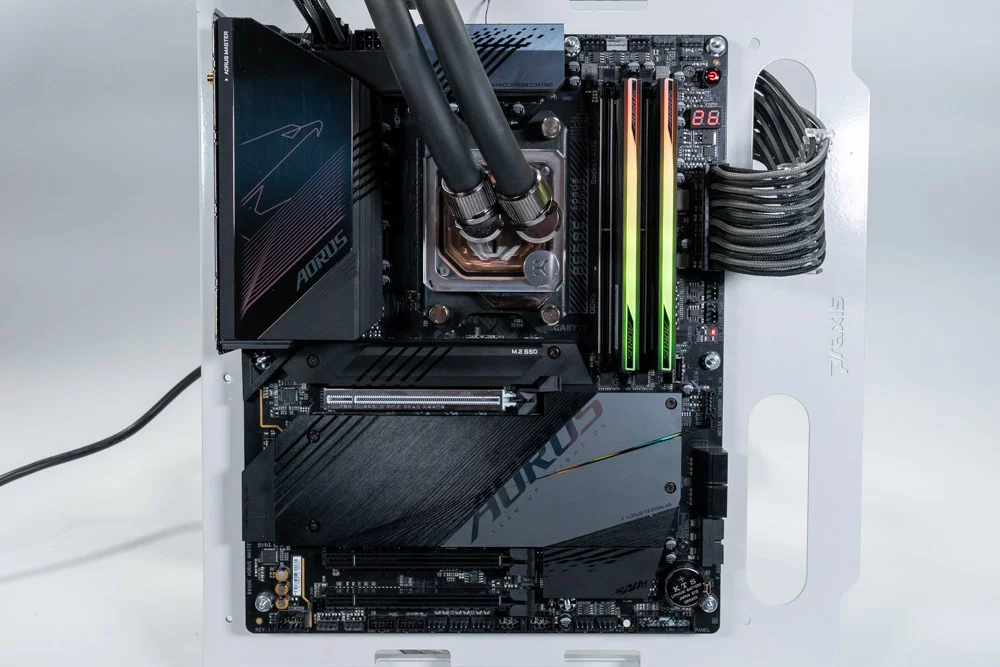
The initial observation is the considerable weight of the board upon removing it from its packaging. It is constructed from metal. The design showcases an elegant black and grey color scheme. While it may not evoke overwhelming admiration, I appreciate a touch of understated elegance. This is in stark contrast to the eye-searing X399 Aorus Gaming 7 from previous generations. Nevertheless, RGB lighting remains a prominent feature, and the B650E Aorus Master is equipped with five RGB headers, two of which are addressable.
The Master provides an extensive array of internal headers, accommodating as many as ten fan or water cooling pump headers. Five of these headers are positioned at the lower section of the motherboard, enhancing its cooling versatility. Additional features on the board comprise a USB 3.2 Gen2x2 Type-C header, power and reset buttons, a BIOS programmable multifunction button, and a header designed for a Gigabyte Thunderbolt 4/USB4 add-in card.
The motherboard accommodates four M.2 drives, which is typical for a premium model; however, Gigabyte has fully embraced this feature. Each of the four slots is compatible with PCIe 5.0 x4 drives. It is important to note that utilizing all four slots will restrict the primary GPU slot to 8x bandwidth. Additionally, the three lower slots are positioned beneath a graphics card, necessitating excellent airflow to avoid overheating. Furthermore, the motherboard includes four SATA ports.
The highest slot is equipped with a substantial and robust metal heatsink, which is evidently essential for the high-speed yet heat-generating PCIe 5.0 SSDs.


















































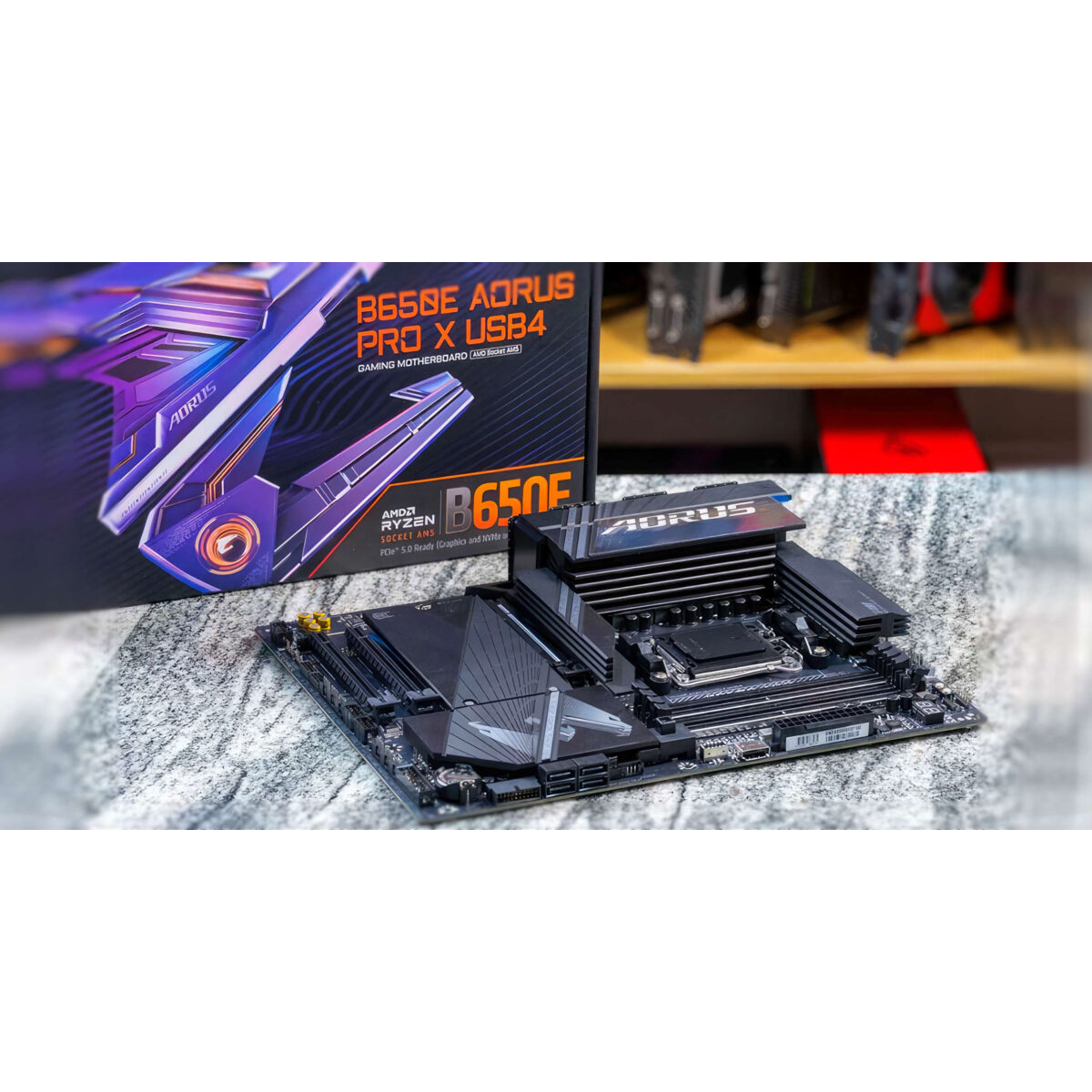
 The B650E Aorus Master distinguishes itself from the VRM of less expensive B650 motherboards, which can be characterized as merely sufficient. It features a robust 16+2+2 phase configuration with 105A stages, allowing users to fully utilize the capabilities of a Ryzen 9 7950X without limitations.
I have consistently admired Gigabyte's cooling solutions, particularly when they employ their finned heatsink designs, which typically provide superior cooling performance for any generation. However, in the case of the B650E Master, the company has opted for a more conventional metallic block. Despite this, the design still offers a substantial surface area. During a 10-minute Cinebench run with a 7950X, the maximum temperature reached was 62°C, which is quite impressive.
Moving on to the rear I/O, and it's USB city. However, due to the I/O restriction of a single chipset B650 motherboard, they are a little speed limited though. The 13 ports consist of five 3.2 Gen 2 including a single Type-C, four Gen 1, and four 2.0 ports. Luckily you get a 3.2 Gen 2x2 header if your case supports it.
The networking capabilities are supported by an Intel 2.5G LAN and an AMD RZ616 WiFi 6E controller. Audio functionality is delivered by the somewhat dated, yet still effective Realtek ALC1220-VB, complemented by an ESS ES9118 DAC. Additionally, the input/output options include a single HDMI 2.1 port, as well as buttons for clearing the CMOS and performing BIOS flashback, the latter of which will prove invaluable in the future.
The B650E Aorus Master distinguishes itself from the VRM of less expensive B650 motherboards, which can be characterized as merely sufficient. It features a robust 16+2+2 phase configuration with 105A stages, allowing users to fully utilize the capabilities of a Ryzen 9 7950X without limitations.
I have consistently admired Gigabyte's cooling solutions, particularly when they employ their finned heatsink designs, which typically provide superior cooling performance for any generation. However, in the case of the B650E Master, the company has opted for a more conventional metallic block. Despite this, the design still offers a substantial surface area. During a 10-minute Cinebench run with a 7950X, the maximum temperature reached was 62°C, which is quite impressive.
Moving on to the rear I/O, and it's USB city. However, due to the I/O restriction of a single chipset B650 motherboard, they are a little speed limited though. The 13 ports consist of five 3.2 Gen 2 including a single Type-C, four Gen 1, and four 2.0 ports. Luckily you get a 3.2 Gen 2x2 header if your case supports it.
The networking capabilities are supported by an Intel 2.5G LAN and an AMD RZ616 WiFi 6E controller. Audio functionality is delivered by the somewhat dated, yet still effective Realtek ALC1220-VB, complemented by an ESS ES9118 DAC. Additionally, the input/output options include a single HDMI 2.1 port, as well as buttons for clearing the CMOS and performing BIOS flashback, the latter of which will prove invaluable in the future.