

















































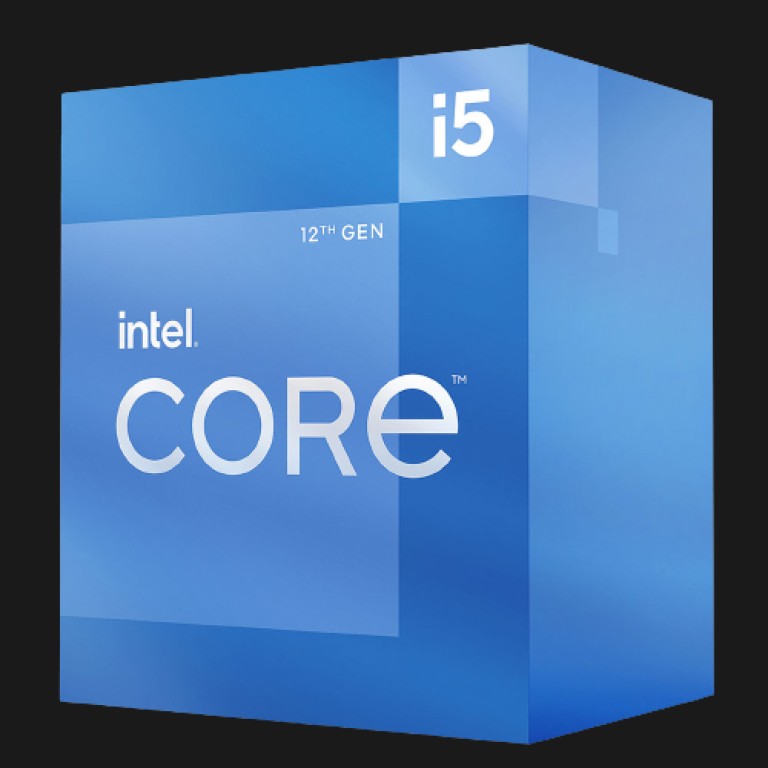
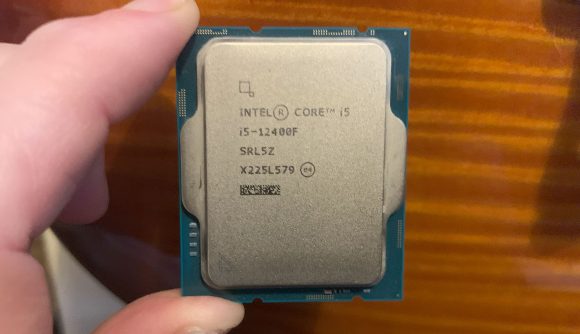
 Following the impressive display of Intel’s K-series Alder Lake CPUs, there was considerable anticipation regarding the gaming performance of the Intel Core i5 12400F. Given its affordable price point of only, we were eager to determine if it could still provide satisfactory gaming capabilities.
To begin with the unfavorable information, Intel's 10nm hybrid core architecture exhibits considerable discrepancies in core counts and types throughout the 12th generation lineup, with the Intel Core i5 12400F being markedly different from the Core i5 12600K. The pertinent question is whether the remarkably low price of the 12400F can still position it as one of the top gaming CPU choices for budget-conscious consumers, notwithstanding the variations in specifications.
A notable aspect of the specifications for the Core i5 12400F is its absence of the four E-Cores found in the Core i5 12600K, which significantly enhances the latter's capabilities in multi-threaded applications. In contrast, the 12400F is equipped solely with the six performance cores that are also present in its K-series counterpart, resulting in a deficit of four cores and threads. Consequently, this is expected to lead to a substantial decrease in multi-threaded performance.
The boost frequencies of the P-Core are comparable to those found in earlier generations, with the more economical CPU reaching a maximum of 4.4GHz, while the Core i5 12600K achieves 4.9GHz. This is evident in the power specifications, where the 12400F has a base power rating of 65W, in contrast to the 125W of the K-series CPU. Additionally, the maximum turbo power for the Core i5 12400F is 117W, compared to 150W for the Core i5 12600K.
Both CPUs consistently reached their single-core boost frequencies during multi-threaded workloads. The Core i5 12600K reduced its P-Core frequency to 4.5GHz, while the Core i5 12400F decreased even further to 4GHz.
Following the impressive display of Intel’s K-series Alder Lake CPUs, there was considerable anticipation regarding the gaming performance of the Intel Core i5 12400F. Given its affordable price point of only, we were eager to determine if it could still provide satisfactory gaming capabilities.
To begin with the unfavorable information, Intel's 10nm hybrid core architecture exhibits considerable discrepancies in core counts and types throughout the 12th generation lineup, with the Intel Core i5 12400F being markedly different from the Core i5 12600K. The pertinent question is whether the remarkably low price of the 12400F can still position it as one of the top gaming CPU choices for budget-conscious consumers, notwithstanding the variations in specifications.
A notable aspect of the specifications for the Core i5 12400F is its absence of the four E-Cores found in the Core i5 12600K, which significantly enhances the latter's capabilities in multi-threaded applications. In contrast, the 12400F is equipped solely with the six performance cores that are also present in its K-series counterpart, resulting in a deficit of four cores and threads. Consequently, this is expected to lead to a substantial decrease in multi-threaded performance.
The boost frequencies of the P-Core are comparable to those found in earlier generations, with the more economical CPU reaching a maximum of 4.4GHz, while the Core i5 12600K achieves 4.9GHz. This is evident in the power specifications, where the 12400F has a base power rating of 65W, in contrast to the 125W of the K-series CPU. Additionally, the maximum turbo power for the Core i5 12400F is 117W, compared to 150W for the Core i5 12600K.
Both CPUs consistently reached their single-core boost frequencies during multi-threaded workloads. The Core i5 12600K reduced its P-Core frequency to 4.5GHz, while the Core i5 12400F decreased even further to 4GHz.
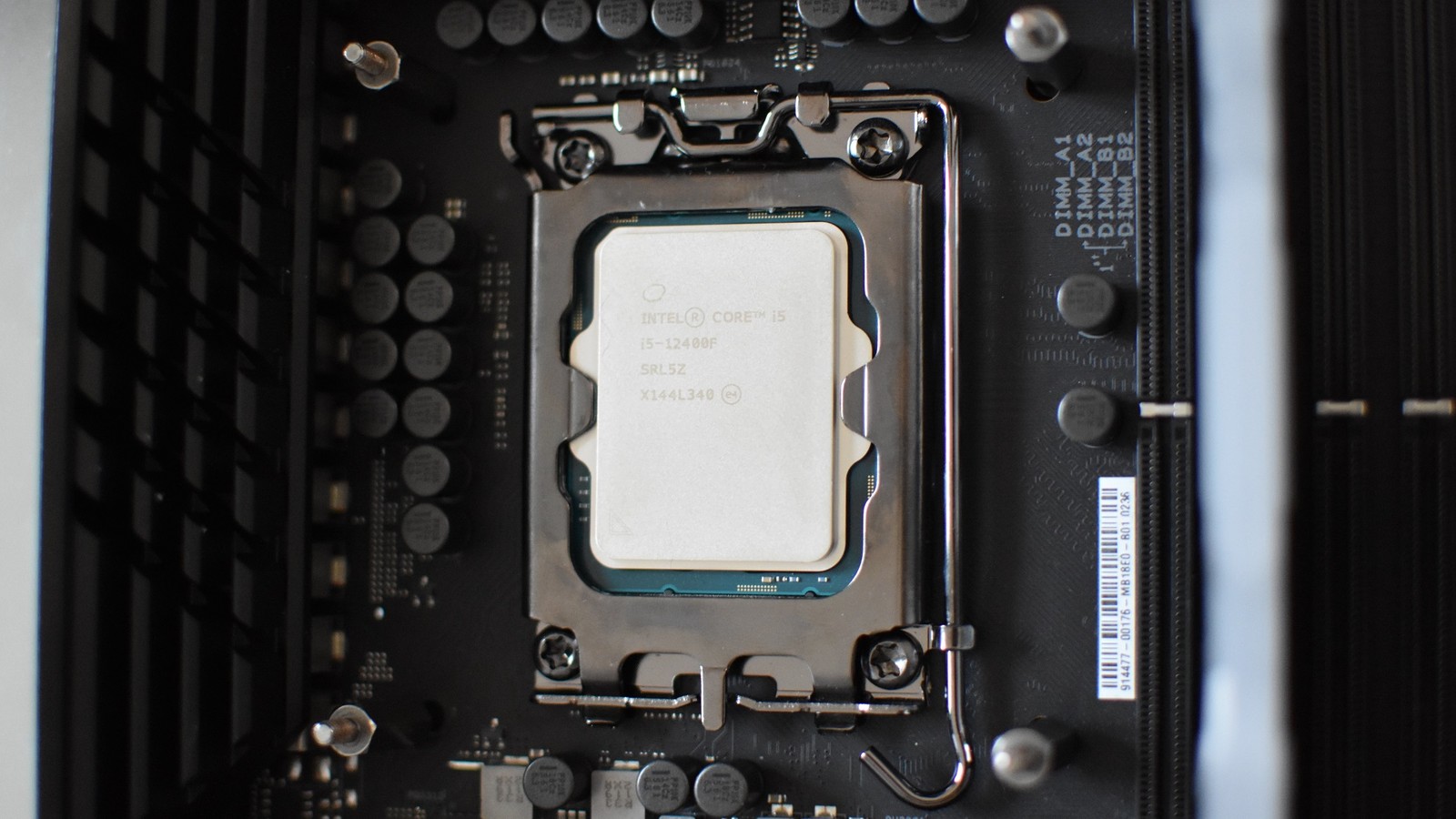 The F-version being evaluated in this instance is more affordable than the standard Core i5-12400 due to its absence of integrated graphics. In contrast, the non-F variant provides the same Intel UHD 770 graphics found in the Core i5-12600K. Additionally, B660 motherboards can be acquired for, allowing consumers to obtain a six-core 12th-generation Intel CPU along with a motherboard that supports PCIe 4 for approximately.
Although it may appear illogical to pair the Core i5 12400F with a high-end motherboard, several motherboard manufacturers are currently developing BIOS updates for their premium models. These updates will facilitate overclocking of the CPU via the base clock, potentially allowing for an increase in the clock speed of this processor in the future.
Currently, AMD faces minimal concern from Intel in the Core i5-12400F market segment. The Ryzen 5 5600X and Ryzen 7 5700G are significantly pricier than the 12400F, and any of AMD's more affordable processors are based on the older Zen 2 architecture, which is notably outperformed by Intel's 12th generation CPUs.
The F-version being evaluated in this instance is more affordable than the standard Core i5-12400 due to its absence of integrated graphics. In contrast, the non-F variant provides the same Intel UHD 770 graphics found in the Core i5-12600K. Additionally, B660 motherboards can be acquired for, allowing consumers to obtain a six-core 12th-generation Intel CPU along with a motherboard that supports PCIe 4 for approximately.
Although it may appear illogical to pair the Core i5 12400F with a high-end motherboard, several motherboard manufacturers are currently developing BIOS updates for their premium models. These updates will facilitate overclocking of the CPU via the base clock, potentially allowing for an increase in the clock speed of this processor in the future.
Currently, AMD faces minimal concern from Intel in the Core i5-12400F market segment. The Ryzen 5 5600X and Ryzen 7 5700G are significantly pricier than the 12400F, and any of AMD's more affordable processors are based on the older Zen 2 architecture, which is notably outperformed by Intel's 12th generation CPUs.





