

















































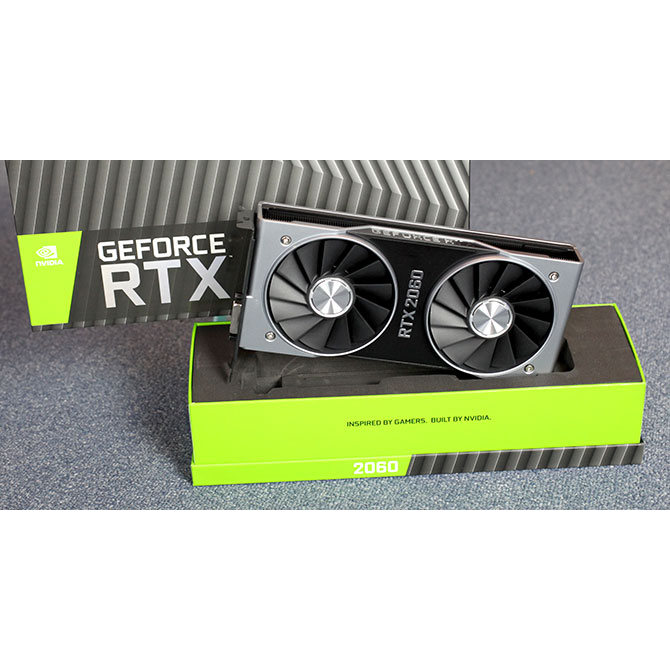
GeForce RTX 2060
The fourth generation of RTX graphics cards continues to utilize the Turing architecture, marking a significant evolution in the graphics card market. In addition to the standard shading engine, NVIDIA has incorporated 30 RT (Ray Tracing) cores and 240 Tensor (AI) cores into the new GPUs, both of which are operational. However, it is important to note that the GeForce RTX 2060 is essentially a modified version of the GeForce RTX 2070 chip, resulting in a reduced GPU and memory configuration. The new RTX series primarily focuses on DX-R (DirectX-R compatible hardware accelerated Ray Tracing). This review examines the reference card, commonly known as the founder edition. It is equipped with 6GB of GDDR6 memory operating at 14 Gbps. This graphics card, rated at 160 Watts, features 1920 active shader processors, compared to 2304 on the RTX 2070. The standard founder version boasts a boost clock of 1680 MHz, with no differences in reference specifications when compared to AIB partners. The card includes 6 GB of the well-known GDDR6 memory on a 192-bit wide bus, delivering 336 GB/s, and is priced at 349 USD.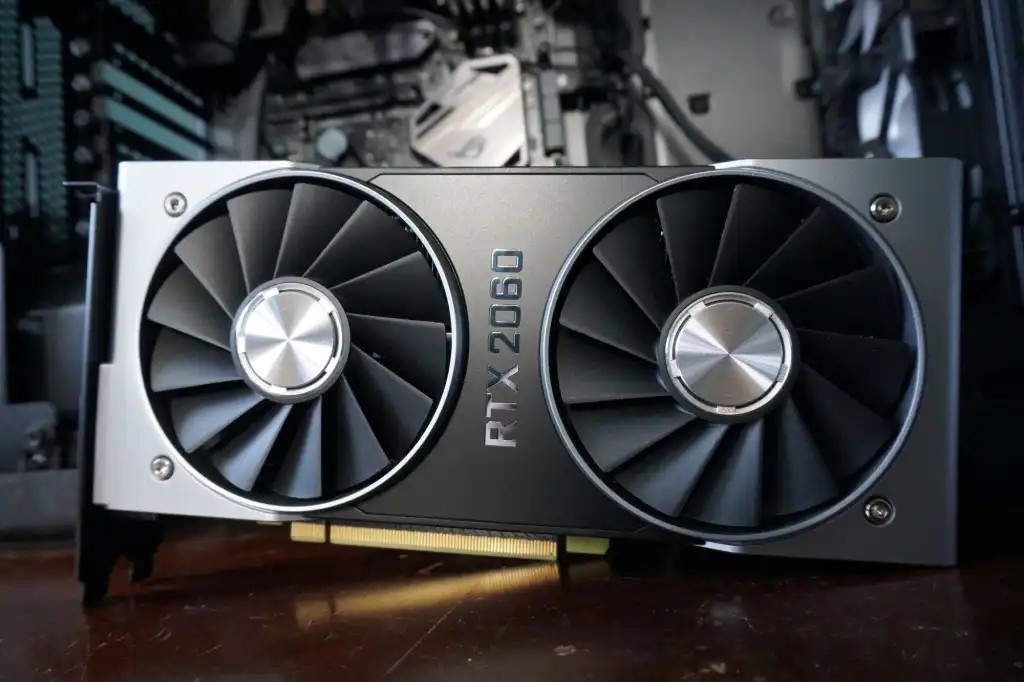
Having a smaller TU106 silicon with close to 11 Billion transistors it doesn't run too hot. The cooler is dual-slot design. The card comes fitted with just one rear positioned power headers (8-pin). The card offers one HDMI ports and two DisplayPort outputs, a DVI connector (yes, that is not a typo) and the new Virtual link (USB) connector. This Turing 106 GPU empowered product keeps that GPU at roughly 65 Degrees C marker depending on game load. Though the GDDR6 memory has been not been tweaked, the ICs are stock 14 GHz (effective clock-rate) but can be bumped upward towards 15 to 16 GHz with the flick of your fingers as we'll show you in the tweaking chapters. Say hello to the GeForce RTX 2060, after which we'll dive into the nitty gritty over the next pages.





